
How Professional Florists Keep Flowers Fresh Longer Than Supermarkets
Learning how florists care for flowers involves watching how they slice stem bottoms underwater at sharp 45-degree angles. This simple angled trim stops trapped air bubbles from blocking hydration paths.
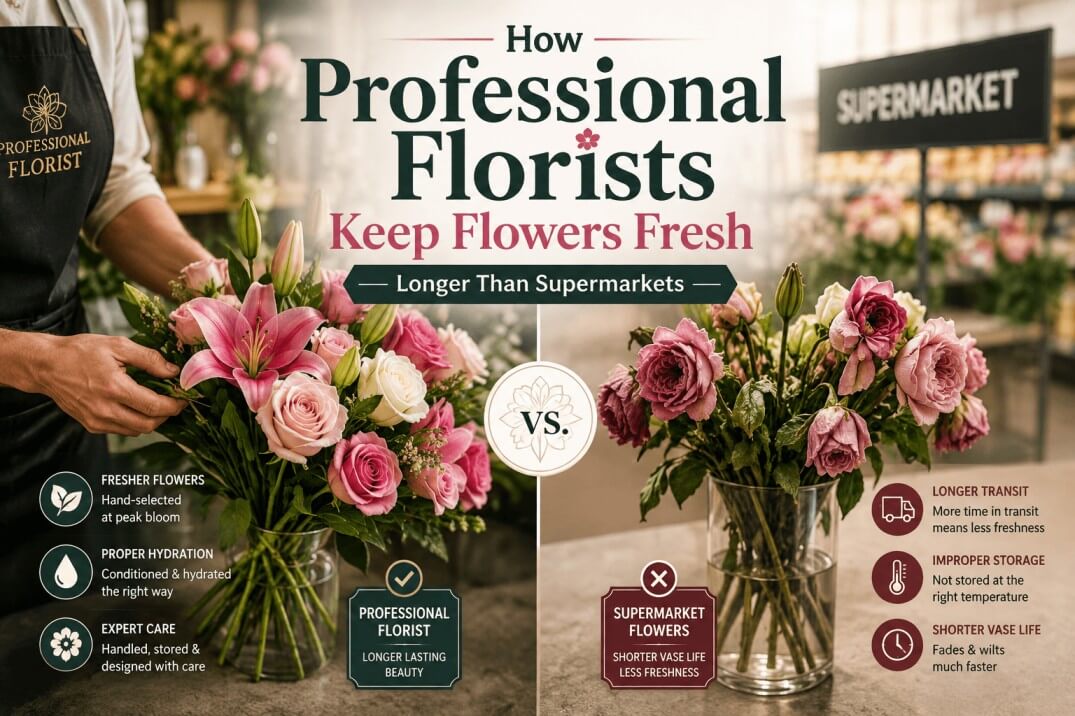
Grocery stores sell stems next to produce displays. Local flower studios handle stems like delicate science experiments. The difference in lifespan comes down to cold chains, clean water routines, and processing methods that supermarkets skip entirely.
Understanding the Florist vs Supermarket Flowers Difference
Supermarkets purchase cut crops in bulk pallets. They keep them dry in warehouses and then display them in room-temperature grocery aisles. Meanwhile, a certified florist in Grand Rapids Michigan uses climate-controlled storage units. Now, these are set around 34 to 38 degrees Fahrenheit with high humidity levels.
This difference creates distinct advantages for local buyers:
- Cold chain storage slows down petal respiration and prevents premature bloom cycles.
- Supermarkets store blooms near ripening fruit displays, which release ethylene gas and trigger quick rotting.
- Specialized shops strip lower foliage completely, stopping submerged leaves from creating cloudy bacterial growth.
- Clean bucket regimens eliminate microbial clogs inside xylem tubes before water transport stalls.
By isolating flowers away from grocery produce sections, dedicated flower handlers stop natural decay before stems ever reach a front counter display.
How Florists Care for Flowers from Arrival to Arrangement
When bundles arrive from farms, florists unpack them immediately. You see, workers check every petal for bruising or mildew. Then, stems undergo a rapid hydration bath. Learning how florists care for flowers involves watching how they slice stem bottoms underwater at sharp 45-degree angles. This simple angled trim stops trapped air bubbles from blocking hydration paths.
Well, stems sit inside specialized commercial sanitizing solutions that balance water acidity. Acidic water travels upward through plant stems faster than plain tap water. Workers also strip excess foliage by hand. Leaves rotting under waterlines release bacteria, which choke stem veins and cause bent-neck wilting within days.
Essential Cut Flower Care Guide for Home Vases
Adopting a practical cut flower care guide helps home arrangements thrive long after purchase. Change vase water every two days without fail. Scrub the inner glass with mild soap during each water swap. Then, slice half an inch off every stem bottom with a clean knife rather than blunt household scissors that crush plant veins.
Specialized Flower Hydration Tips and Cold Storage
Dedicated shops invest in commercial floral coolers. Ordinary kitchen refrigerators remove moisture, but floral coolers pump gentle moisture into the air constantly. Finding the best florist in Grand Rapids, MI means choosing studios that balance temperature and humidity accurately.
Furthermore, proper flower hydration tips rely on three-part nutrient packets containing sucrose, acidifiers, and stem clarifiers. Sugar feeds the opening bud, acid lowers the water pH for quick absorption, and bleach controls water bacteria. Supermarkets occasionally hand out generic dry packets, but boutique shops hydrate their stock with precise liquid ratios during processing.
How to Extend Flower Vase Life Like a Pro
Learning how to extend flower vase life does not require industrial refrigeration. Homeowners can practice basic flower preservation tips by keeping vases away from warm appliances, drafty vents, and sunny window glass. Heat evaporates stem moisture faster than cut roots can drink.
Also, testing how to make flowers last longer at home involves using simple stem hygiene. Pluck fading petals immediately so dying tissues stop spreading fungal spores to adjacent buds.
Professional Florist Tips for Everyday Flower Buyers
These proven professional florist tips help shoppers evaluate freshness before purchasing:
- Squeeze rose heads gently right above stem bases; firm calyx bases indicate fresh, crisp petals.
- Inspect stem bottoms for pale green ends rather than brown, slimy edges.
- Check that lily buds show distinct color tints without opening completely in retail display buckets.
People comparing flower shops near Rockford MI should examine shop cleanliness directly. Clean display water and cool showroom floors indicate superior plant maintenance. This answers why anyone researching how florists keep flowers fresh discovers proper hygiene matters far more than mysterious additives.
FAQs
Why do florist flowers last longer than supermarket flowers?
Florists sanitize buckets, cut stems under water, use precise floral nutrients, and maintain cold chains. These are a few things that they differently do from grocery stores, which stops early blooming.
Do florists use special flower food?
Yes, commercial floral solutions contain exact ratios of sugar, citric acid, and antibacterial agents rather than standard table sugar.
How can I make fresh flowers last longer at home?
Trim stems at an angle every two days, wash the vase with soap, and use floral nutrient packets. Also, avoid direct heat sources.
How often should I change the water in a flower vase?
Swap vase water every 48 hours, if not earlier. This is to prevent bacterial colonies from clogging stem openings.
Which flowers have the longest vase life?
Carnations, chrysanthemums, alstroemeria, and orchids last between two and three weeks – only with proper stem care.
Is it better to buy flowers from a local florist?
Yes, local shops source higher-grade stems, store them at correct humidity levels, and prep them for longer vase performance.
Keep your home bright with longer-lasting arrangements crafted by expert hands. Visit Southside Flower Market today to order fresh, professionally conditioned blooms delivered straight to your door.